
By Dr. Dan Schauff, Ph.D., P.A.S.
In the last decade, there has been a dramatic shift towards higher milk fat and skim-solids production in U.S. dairy herds (USDA ERS, 2021). This is in response to consumer trends towards increased butter and cheese consumption and decreased fluid milk consumption (USDA ERS, 2024). These dramatic improvements in milk solids production are due to advancements in genetics, management, and nutrition of dairy cows. Continued enhancements in solids production and efficiency will be essential for the future profitability of dairy herds in the U.S. Many well-known feeding management and nutritional factors can influence milk solids production positively or negatively. However, the scope of this article is to identify lesser-known factors that can limit dairy herds from realizing their full genetic potential for solids production and efficiency.
Epigenetics is an emerging area of research that shows how the nutritional and environmental status of dairy cattle can alter the expression of their genetic potential. The remainder of this article will be looking at a few examples of how nutritional and environmental status of dairy cattle affect milk and milk solids production.
Proper feeding and managing of newborn and older heifer calves generally results in healthy and more productive cows. We have known for many years heifer calves that receive colostrum of adequate quantities (4 quarts), quality, (>25 g/L IgG), and quickly after birth (1-4 hours; Godden et al., 2019) will likely be healthier and more productive as cows (Table 1). Heifer calves fed 2-3 lb compared to 1-1.25 lb of milk replacer or milk solids have higher average daily gain and produce more milk once these heifers get into the milking string (Figure 1).
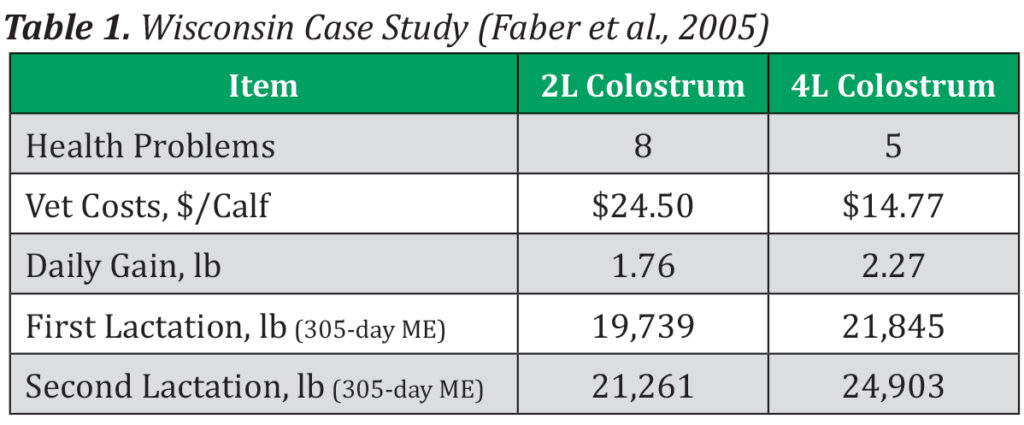
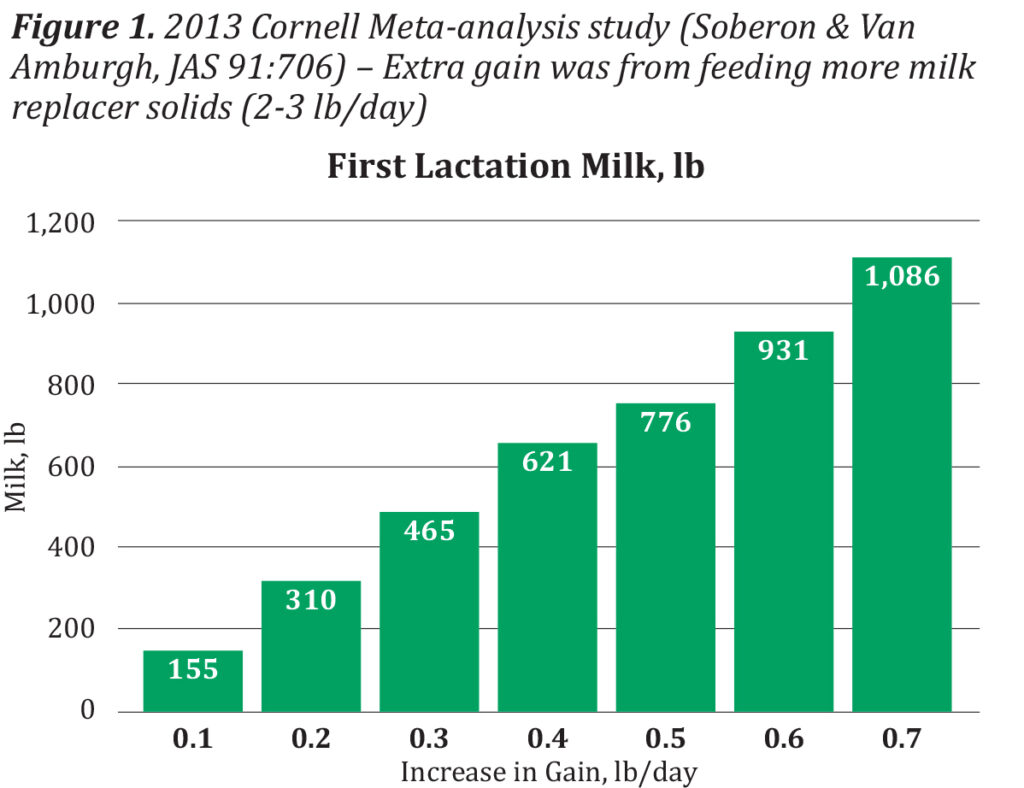
This is presumably due in part to the positive impact of nutrition on health and the genetic expression of mammary tissue development before puberty (Brown et al., 2005; Bartol et al., 2013). However, it is also worth noting feeding heifer calves to gain in excess of 2.2 lb/hd/d during 3-10 months of age (critical phase for mammary tissue development) can result in more fat and less mammary tissue development. This can lead to heifers not realizing their genetic potential to produce milk and milk solids. Consequently, there is a balance that needs to be applied in terms of average daily gain (1.8-2.2 lb/hd/d) to optimize growth and health without undesired fattening.
The transition from milk and milk replacer feeding to dry feed is also a critical time point in a heifer’s early life. Many producers have been successful at weaning transitions by ramping down milk replacer and milk solids feeding two weeks prior to weaning to encourage the intake of water and a well-made and palatable texturized calf starter. When high genetic merit heifers fail to milk to their genetic potential, there is usually some health or growth issue that negatively alters the expression of that genetic potential.
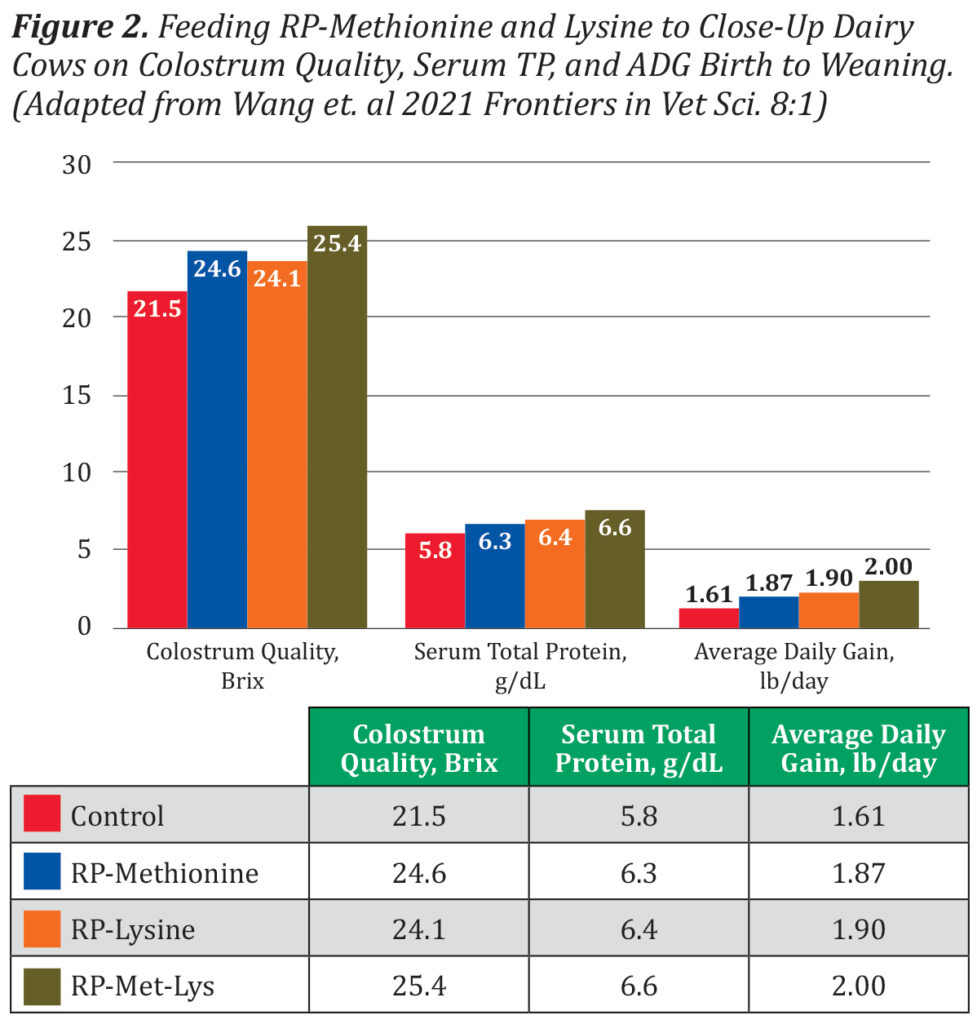
Most dairy producers are doing a much better job of feeding and managing late gestation and transition cows and heifers, which results in fewer fresh cow health problems and better milk production. However, there is growing evidence that the nutrition of the late gestation period not only impacts the cow’s health and performance, but also her calf’s future health and growth. Feeding rumen-protected methionine, lysine, or a combination of both to late-gestating cows resulted in improved colostrum quality and serum total protein (Figure 2).
As expected, improvement in colostrum IgG levels and absorption of IgG (higher serum protein) translated into a better average daily gain of these calves (Figure 2). Enhanced average daily gains likely will result in improvements in first lactation and perhaps lifetime milk and milk solids yields. In a 2001 field trial conducted by Agri-King, we observed improvements in the IgA levels in colostrum when Tri-Lution® was fed to prefresh cows.
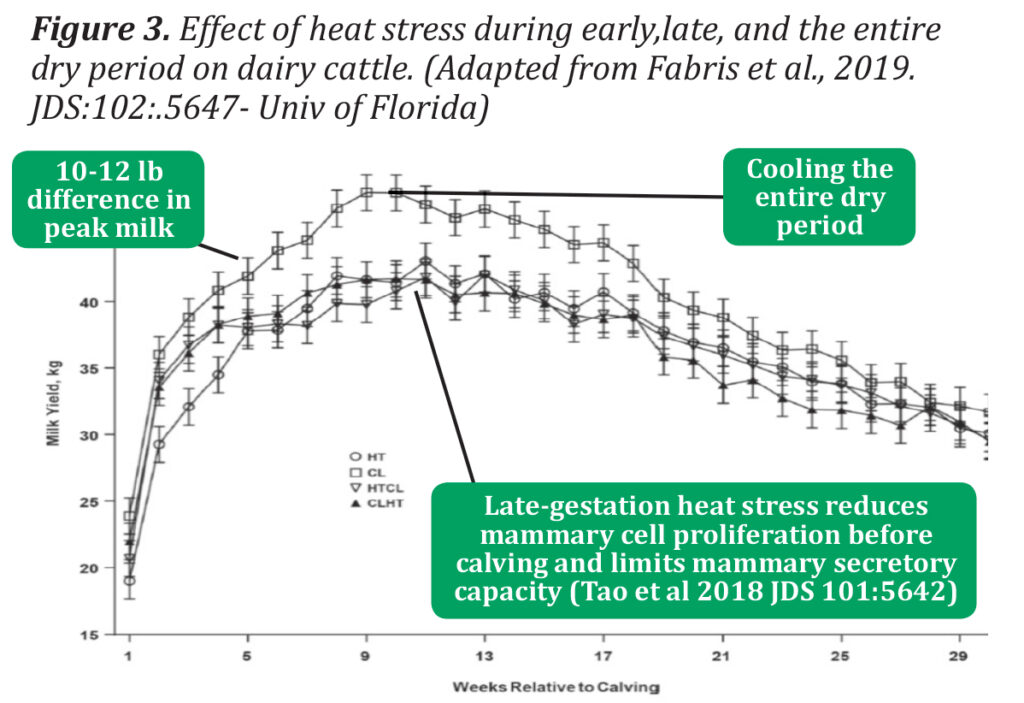
The negative effects of heat stress on lactating cows are well known. However, heat stress on late-gestation cows and heifers can have more long-lasting effects on future milk production. Research from the University of Florida observed a reduction in mammary cell proliferation in heat-stressed late-gestation cows (Tao et al., 2018). Dry cows only receiving shade versus dry cows receiving shade, water sprinklers, and fans produced 10-12 lb less peak milk (Figure 3).
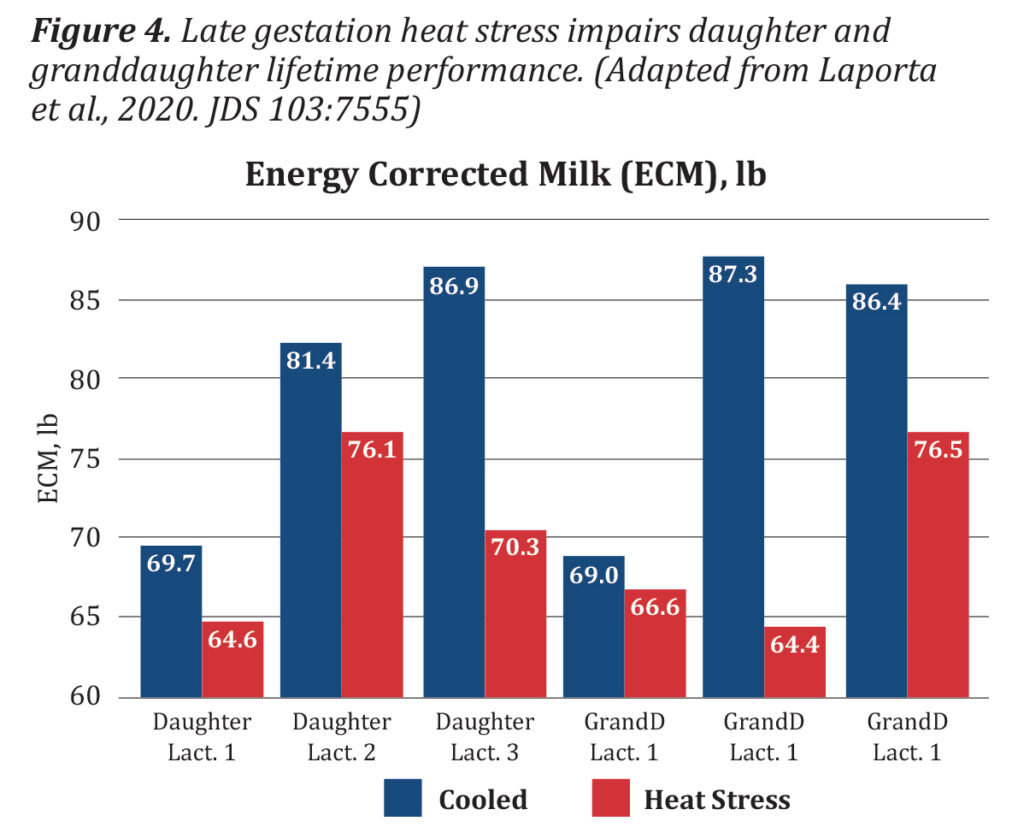
This is a major reason why herds can recover slowly in milk production in the fall long after summer heat stress is over. In fact, the late gestation heat stress impact goes far beyond the next fall. This is because the impact of late gestation heat stress impairs these cows and their daughters’ and granddaughters’ lifetime milk production (Figure 4). Therefore, heat abatement strategies that include shade, water soakers/sprinklers, and fans are equally important for dry cows and lactating cows.
The keys to realizing the full genetic capacity of today’s high genetic merit cows to produce milk and milk solids are multifaceted. The foundation starts with the optimal feeding and managing of late gestation and their heifer calves to more fully realize their genetic potential. Contact our field nutrition consultants to see how you can improve your dry cow and heifer feeding programs to better realize their genetic potential. In addition, ask about what can be done to at least partially mitigate the effects of heat stress on dry and lactating cows using Bovine Replete.