
By Dr. Adrian Baker, Ph.D.
Mycotoxins in feedstuffs fed to growing beef cattle have been of little concern and quite often growing cattle have been utilized as an outlet for contaminated feed. One of the mycotoxins that has been more extensively studied in beef diets is deoxynivalenol, commonly known as vomitoxin. A review of the effects of molds and mycotoxins in ruminants suggests that growing cattle are able to consume vomitoxin-contaminated feeds up to 21 ppm with no adverse effects (DiCostanzo et al., 1995). Performance results adapted from that review are shown in Table 1.
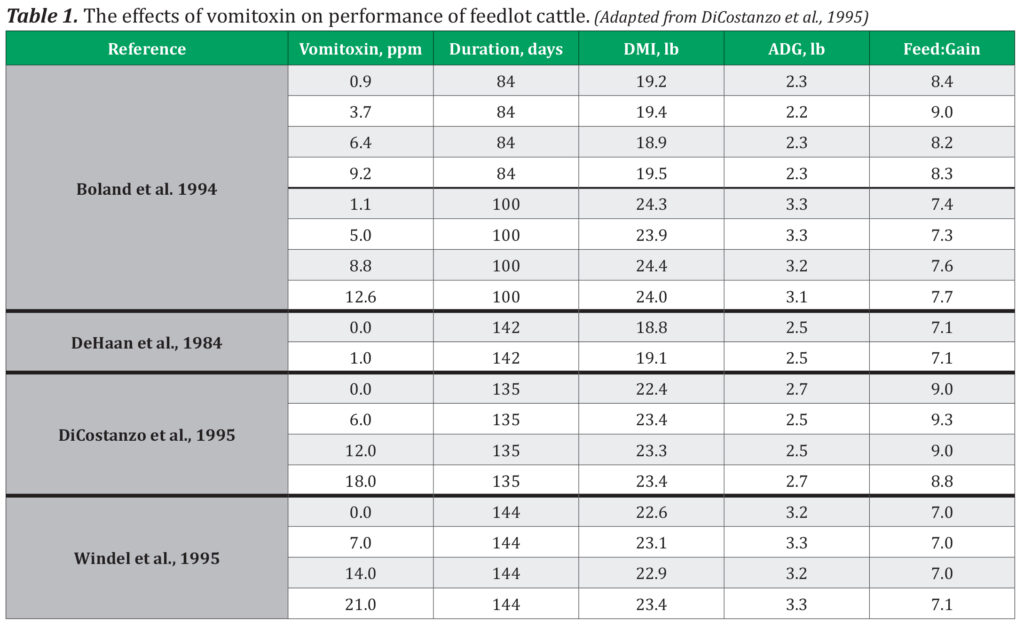
It appears from these results that cattle consuming increasing concentrations of vomitoxin did not differ in performance from cattle consuming minimal amounts of vomitoxin. This has led the FDA to provide advisory levels for vomitoxin.
Advisory levels for vomitoxin set by the FDA:
An on-farm research trial contradicts the adage that vomitoxin is not a concern in beef cattle diets. For this trial, 657 head of high-risk receiving calves were fed a grower diet. Animals were received in four groups (replications) and were randomized within group into two treatments for a side-by-side comparison of the effects of adding AKMC to feeder cattle diets that contain moderate amounts of vomitoxin (range 2.54 to 5.79 ppm total diet). Cattle receiving AKMC were fed 0.05 lb of AKMC daily and results from the trial are shown in Table 2. In this trial, increases in dry matter intake (DMI) were observed, which contributed to increased average daily gain (ADG) and subsequently, greater final body weights (BW).
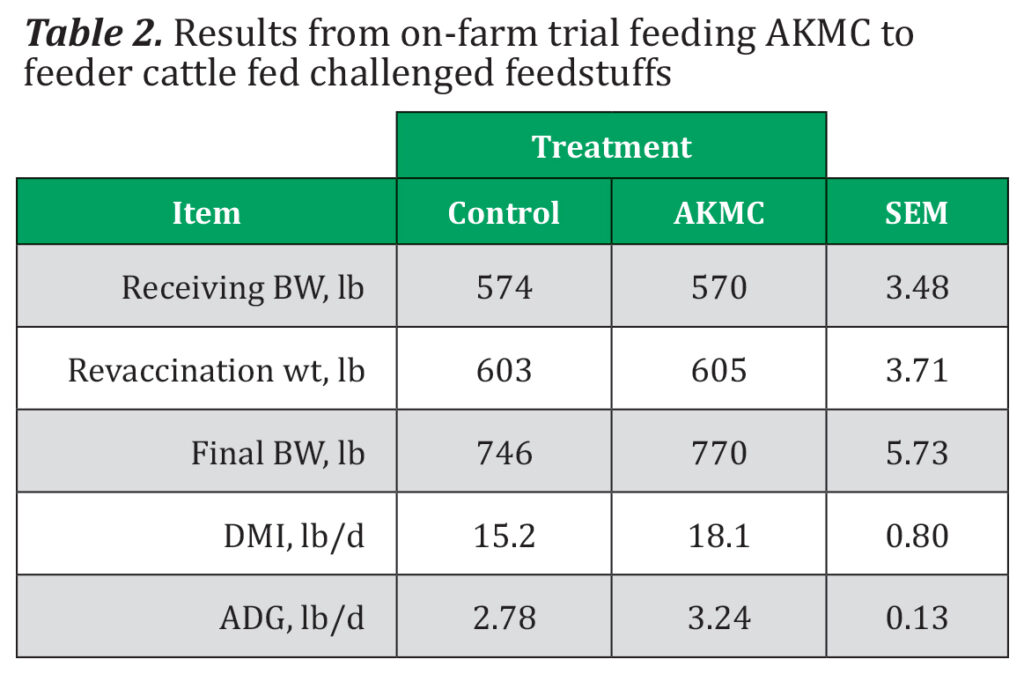
This study suggests that vomitoxin is an issue in receiving cattle and AKMC aided in alleviating the negative effects of that challenged feed. These results are counterintuitive to previous research and it is generally assumed a healthy rumen microbial population is capable of detoxifying deoxynivalenol to less toxic de-epoxy-deoxynivalenol. However, an in vitro study by Debevere et al. (2020) demonstrated the rumen microbiota have limited ability to reduce toxins in acidotic or low microbial activity conditions. Cattle from the experiments in Table 1 do not appear to have been aggressively fed and were heavier cattle, which may potentially make them less susceptible to the effects of vomitoxin than we observed.
In the current experiment, the calves would be considered high-risk due to lack of weaning and upwards of eight hours of transport stress. These calves would have likely been naive to vomitoxin and, additionally, would have low microbial activity due to extended periods without feed and water from transportation. Stressors such as transport, weaning, and feed changes have always been a concern for cattle producers and it appears mycotoxins compound those stressors.
It is apparent from the on-farm trial that newly-received calves are more susceptible to mycotoxins than previously thought. Agri-King’s nutrition consultants can help you quantify mycotoxins with total mixed ration testing through Agri-King’s Analab and offer solutions such as AKMC, which is a nutritional supplement designed to aid livestock in dealing with nutritionally-challenging feeds. AK