By Grace Thomas, M.Agr.Sc. P.A.S.
Soya has long been the go-to protein feed source in dairy cow rations. However, if feeding soya is controlled or limited by the milk buyer, the producer must find an alternative source of protein to meet the cows’ protein needs. To find the best replacement for soya in a diet/ration, understanding how soya is utilised by the animal is the best place to start.
Cows do not have a specific requirement for crude protein (CP), instead they require amino acids and nitrogen (N). Their main protein source comes from microbial protein and bypass protein, which together are referred to as metabolisable protein (MP). The MP exits the rumen to the abomasum, where digestive enzymes break them down into amino acids. These amino acids are then absorbed into the bloodstream in the small intestine and are transported throughout the body to be utilised as needed.
Meeting a cow’s nutritional needs depends on the type of protein provided and how the rumen microbes utilise the feed. Understanding the protein fractions of alternative protein feedstuffs, how the protein is compartmentalised and utilised by the cow and rumen will aid in balancing a soya-free ration for optimal production.
The protein fractions and explanation of how these fractions are utilised by both the cow and the rumen, are as follows.
Crude protein is the total protein in a diet or sample; it is calculated based on the nitrogen content of a feed and the calculation is N x 6.25. The CP only indicates the total nitrogen of the feed, it does not reveal how much true protein is present or the availability of the nitrogen in the rumen. CP is measured on a dry matter (DM) basis. True protein is protein that yields amino acids when digested.
This is the protein that the cow receives, it consists of microbial protein and by-pass protein. The Agri-King equivalent term is modified available protein (MAP). Microbial protein is protein that is manufactured by the microbial population. Maintaining a stable and healthy rumen environment with a consistent supply of nitrogen, degradable protein, and carbohydrates supports and ensures microbial protein synthesis.
Rumen degradable protein (RDP) is the fraction that is broken down by the rumen microbes, supporting microbial protein synthesis. It is expressed as a percentage of CP. It is divided into soluble protein (SP) and insoluble but degradable protein. The latter is available for microbial use, but breaks down more slowly than SP.
SP is a component of RDP. It is quickly fermented in the rumen providing an immediate nitrogen source to the microbes for fermentation. This type of protein is 100% degradable in the rumen, it can be in the form of dietary protein or as a nitrogen.
Rumen Undegradable Protein (RUP) is not digested in the rumen and is often referred to as by-pass protein. This type of protein passes through the rumen unaltered and is digested in the abomasum to amino acids. Some companies provide protein feeds that have undergone heat treatment or a coating, that allows the protein to pass through the rumen intact.
Undegraded Dietary Protein (UDP) remains undigested. It passes through the digestive tract unchanged and is excreted in the manure. UDP is part of the by-pass protein fraction.
This protein fraction contains a nitrogen source that is not composed of amino acids. Ruminants are unique, as the rumen microbes can use this source of nitrogen to make microbial protein. Once the NPN enters the rumen it is rapidly broken down into ammonia by the rumen microbes. The rumen microbes use this ammonia along with energy from carbohydrates to synthesise microbial protein. Any excess ammonia will be absorbed into the bloodstream and transported to the liver, where it is converted to urea. This urea can be recycled back to the rumen via saliva or excreted in either the urine or milk.
As the percentage of each protein fraction is different across all feeds, knowing the protein fraction of the feed will help determine the best protein source that will work with each on-farm forage. Table 1 lists some common protein commodities and their protein fractions. For feeds where information was not readily available, the corresponding table cells were left blank.
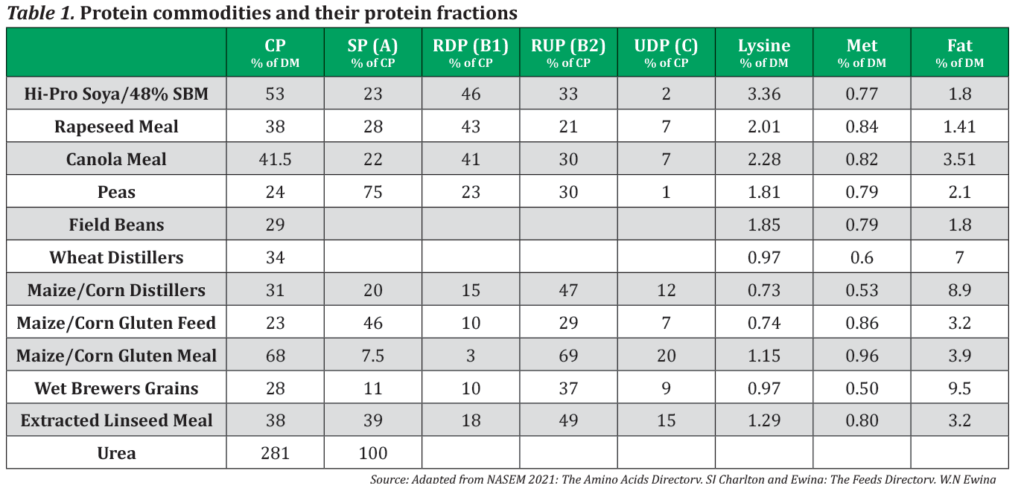
When deciding on alternative protein feeds, assessing the protein fractions of each feed is a good place to begin; however, it is important to evaluate how the feed contributes to the overall ration. Soya is a concentrated protein source, so it allows for greater inclusion of forages and energy in the diet. A direct protein feed swap is rarely possible, and there is a need to ensure that forage and commodities are adjusted to maintain a balanced diet. Some alternative protein feeds are high in oil, so it’s important to consider the impact of increased fat levels in the overall diet. Additionally, protected amino acids can help correct any deficiencies within the ration, and may be beneficial where diet density is a concern.
Speak to your Agri-King representative today. Sampling and analysing the on-farm forages and commodities is part of the Agri-King nutrition programme. Analysing on-farm feeds is fundamental in identifying and determining the optimum protein source to meet your needs. A key feature of the Agri-King nutrition programme is the balancing of protein to energy, thus ensuring that the cow is more efficient. Monitoring the milk urea nitrogen levels can help indicate if there are any issues with this balance. AK
Sources:
– Charlton, S. J., & Ewing, W. N. (2023). The Amino Acids Directory. 5M Publishing.
– Ewing, W. N. (1997). The Feeds Directory. 5M Publishing.
– National Academies of Sciences, Engineering, and Medicine (2021). Nutrient Requirements of Dairy Cattle: Eighth Revised Edition. The National Academies Press.