
By Dr. Dave Jones, Ph.D., P.A.S.
Along with peptides and free amino acids, ammonia is released from protein degradation. In the 1950s, the idea of ammonia being important in the rumen was recognized. From the 1970s to the 1980s, an understanding of ammonia requirements in the rumen started to develop:
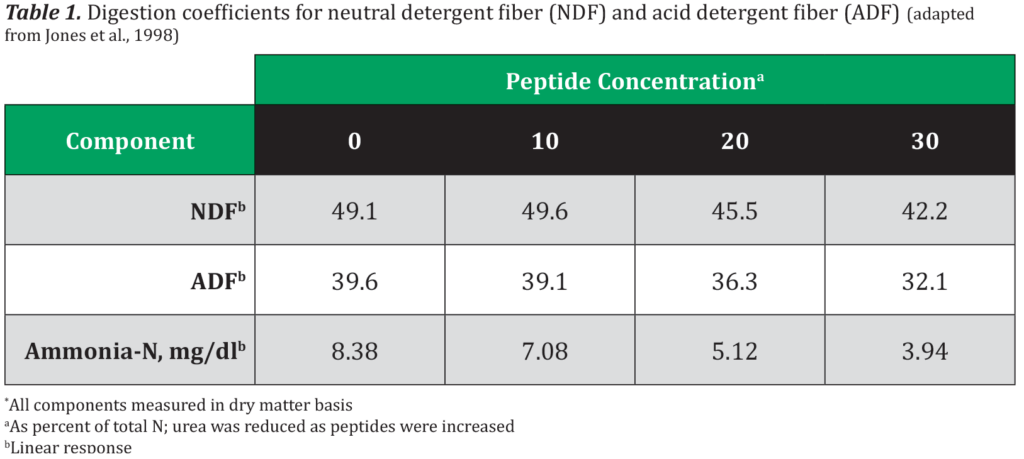
Knowing amino acids, small peptides, and ammonia N are utilized by rumen microorganisms, Jones et al. (1998) looked at replacing urea (a source of soluble N leading to the production of ammonia in the rumen) with peptides (chains of amino acids smaller than proteins). As peptides increased, from 0 to 30% of dietary CP, urea was reduced in the diet (diets were maintained at 45% NSC). The reduction in urea was followed by reduced acid detergent fiber (ADF) and neutral detergent fiber (NDF) digestion (Table 1). It was suggested that, with diets containing greater NSC concentrations, increasing peptides relative to urea can reduce ammonia concentration in the rumen (Table 1), which limits the growth of fiber-digesting bacteria.
In 2005, Schwab et al. summarized the following as being important for rumen microorganisms:
Rumen ammonia N concentrations of 12.8 mg/dL have been suggested as the optimum for efficient microbial protein synthesis for dairy cows fed corn silage-based diets (Boucher et al., 2007). Newer research (Roman-Garcia et al., 2016) shows a positive effect in efficient microbial protein synthesis to iso-acids (branched-chain volatile fatty acids) when ammonia-N concentrations are 12.9 mg/dL.
Why is this important?
Although ammonia is required by rumen bacteria, too much ammonia in the rumen is not desired. Ruminants contain the enzyme urease in the rumen, making them more susceptible to ammonia toxicity than non-ruminants. Therefore, Agri-King monitors the ammonia concentration of fermented forages and includes this parameter in the balancing of rations. If forages are fed that did not ferment correctly (or are simply wetter than desired), the ammonia concentration of that forage may be elevated. Additionally, forages may be treated with ammonia, which will also lead to elevated ammonia in the diet. In either case, the ration fed may become problematic if non-protein nitrogen ingredients, such as urea, are also included in the diet.
With or without urea, elevated dietary ammonia concentration can lead to a rapid increase in ruminal ammonia concentration. Excess ammonia can increase the pH of the rumen (ammonia available outpaces ammonia utilized) and will enter the bloodstream, where it can then cross the blood-brain barrier and affect the central nervous system. Symptoms of ammonia toxicosis (colloquially referred to as “bovine bonkers”) include (Merck Veterinary Manual, 2005):
Other dietary situations to consider that can cause high ammonia concentrations in the rumen are grazing cattle on pasture where fertilizer/manure has been applied and feeding raw soybeans in conjunction with urea. If fertilizer/manure is applied to pasture, cows should not be allowed to graze that pasture for at least two weeks. This will give the plants time to utilize nitrogen, minimizing issues from nitrates and excess ammonia synthesis in the rumen (Figure 1). Raw soybeans contain the enzyme urease, which releases ammonia from urea. This can lead to a rapid increase of ammonia in the rumen, potentially causing issues outlined above if raw soybeans and urea are fed in the same diet.

Overall, we need to remember that ammonia is required as a source of nitrogen by the rumen bacteria. It is important to have the nitrogen fractions of the ration balanced to manage the required ammonia concentration needed by the rumen microbes. Too much ammonia is toxic, so care must be taken when building rations for dairy cows. To help with this, Agri-King includes dietary ammonia concentration as part of the ration formulating process. Work with your Agri-King nutrition consultant to provide rations suited for your herd.
Sources available upon request