By Dr. Dan Schauff, Ph.D., P.A.S.
We are learning more from field observations and research evidence of the negative impact that inflammation and oxidative stress have on milk production and the health of dairy cows. Summer heat stress can cause an inflammatory and oxidative stress response in lactating dairy cows, resulting in decreases in dry matter intake, milk production, components, and breeding efficiency. The cause of the reduced production goes beyond just a decline in dry matter intake.
Researchers from the University of Arizona (Wheelock et al., 2010) evenly split 22 lactating dairy cows into two separate environmental chambers where temperature and humidity were controlled. All cows were fed the same ration. One chamber’s environment was kept under thermoneutral conditions, and the other chamber’s environment mimicked heat stress conditions. The dry matter intakes of the cows in the thermoneutral chamber were restricted to match the dry matter intakes of the heat-stressed cows. With somewhat similar dry matter intakes, milk production declined by 17.7 lb (8 kg) of energy-corrected milk (ECM) for the heat-stressed group, while the milk production decreased only 9.5 lb (4.3 kg) of ECM for the thermoneutral cows (Figure 1).
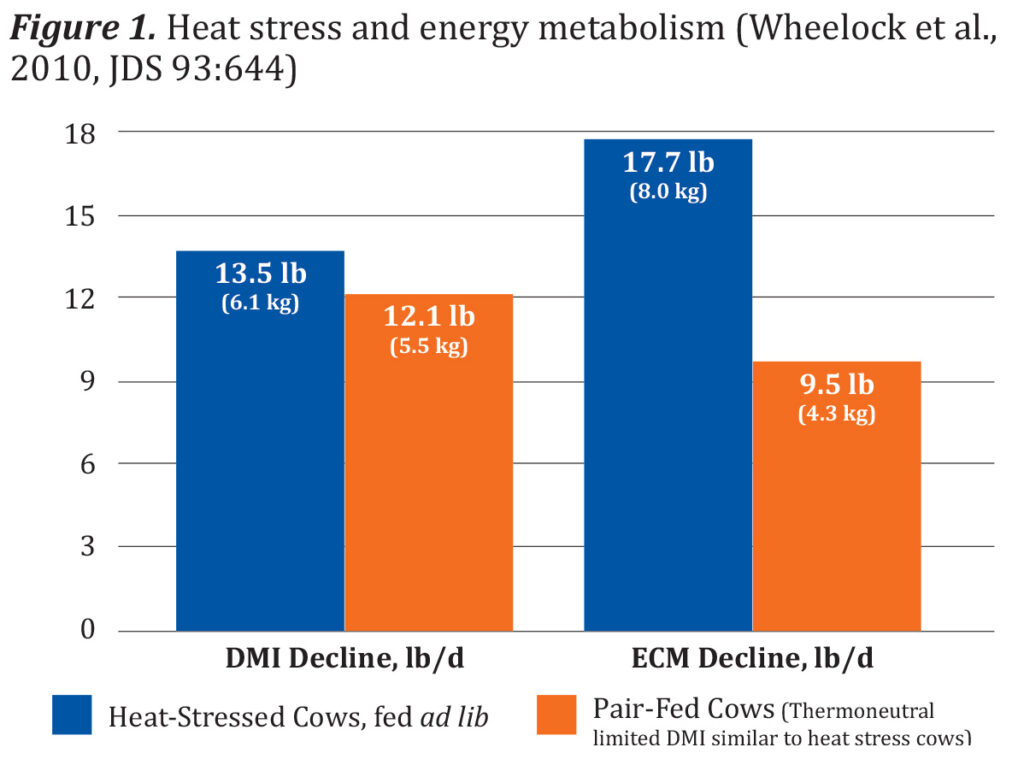
However, reduced dry matter and nutrient intake only account for about half of the decrease in milk production. So, what is going on here? Energy is being diverted from milk production to an apparent increase in the cow’s maintenance requirement. Research from Iowa State University indicates that, when animals are exposed to stressors like heat stress, an inflammatory response is activated by the cow’s immune system that diverts glucose away from milk production to mount an immune response. Their data indicates cows could be expending from 1,000 grams (2.2 lb) up to 2,000 grams (4.4 lb) of glucose to mount an immune response to a disease, inflammatory, or oxidative stress challenge (Kvidera et al., 2017). This is enough glucose to support 6-12 lb (2.7-5.4 kg) of milk production.
This inflammatory immune response starts with a stressor disrupting the ruminal and intestinal microbiome and the epithelial cells that line the gut. These cells are the “gatekeepers” of the body and the first line of defense against disease and inflammation. When there are limited stressors and a healthy gut microbiome, their cells have healthy tight junctions (Figure 2). The tight junctions are cellular proteins that help to hold together the integrity of the gut cell lining. This results in the efficient absorption of nutrients, while preventing the passage of “bad” bacteria, viruses, and endotoxins into the bloodstream (Figure 2).
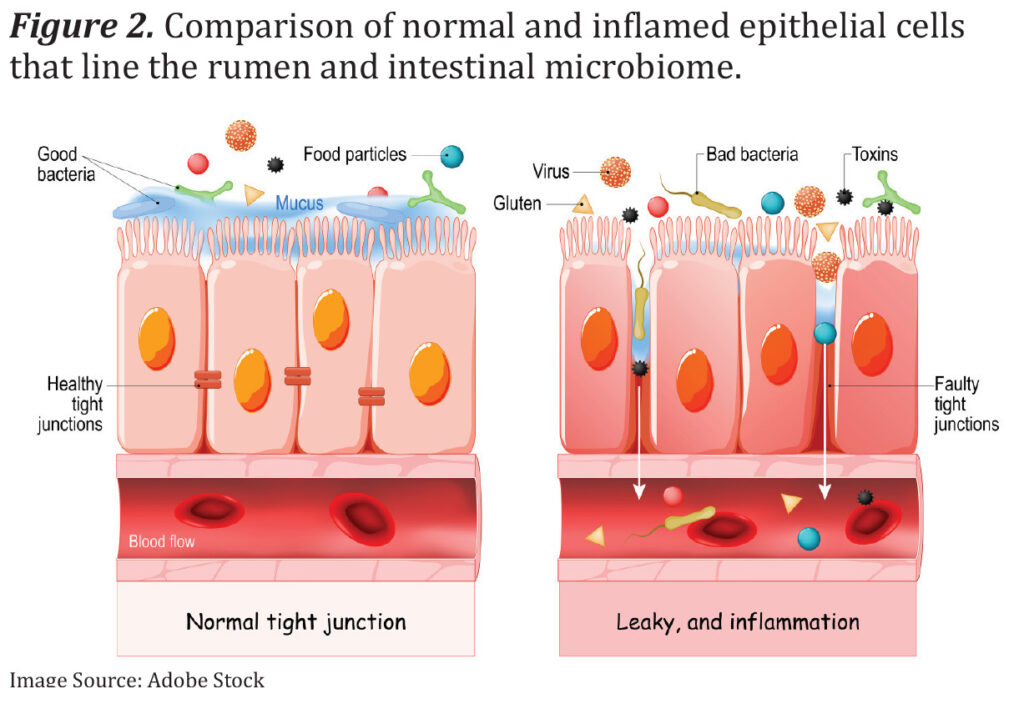
When stressors such as excessive heat overwhelm the ruminal and intestinal microbiome, the integrity of their tight junctions and the cell lining can be compromised. When this compromise happens, “bad” bacteria, viruses, endotoxins (lipopolysaccharides [LPS], parts of the bacterial cell wall) can enter the bloodstream, inducing an inflammatory response by the immune system (Figure 2).
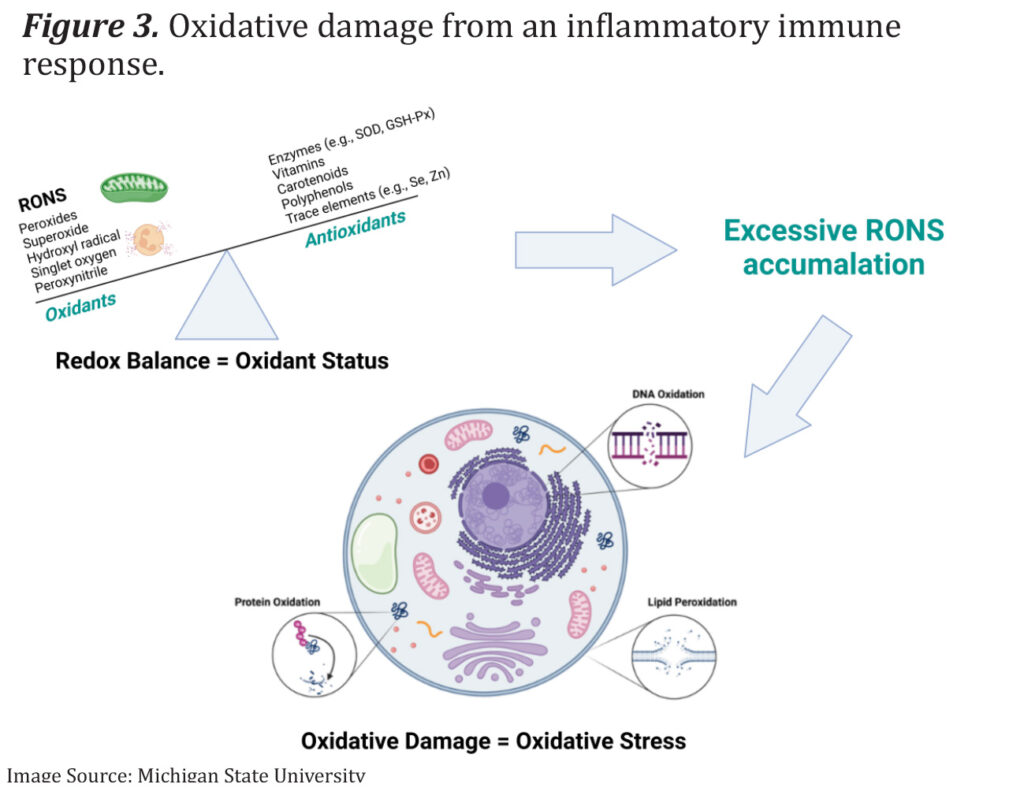
Once the immune system is activated, the production of reactive oxygen species (ROS) like peroxides, super oxides, etc. can overwhelm the animal antioxidant enzymes (superoxide dismutase [SOD]; glutathione peroxidase [GPx], and others) and antioxidant nutrients and compounds designed to protect the cell and tissues from oxidative damage and stress (Figure 3).
Some common items that can contribute to this undesirable inflammatory/oxidative stress cascade include:
What can be done to prevent or limit the negative effects of inflammation/oxidative stress on dairy cattle?
Talk to your local Agri-King nutrition consultant regarding the use of Silo-King® to help with optimizing forage quality, direct-fed microbial products (AKMC, Tri-Lution®, Ru-Mend®, Zy-Mend®, and Zym-O-Factors®) to help maintain a healthy rumen and intestinal microbiome, and AK Bovine Replete, which is a product designed to help better meet the antioxidant requirements of animals under oxidative stress due to various stressors like heat stress. AK