by David A. Spangler, VP, Research & Lab Services
Knowledge and understanding of what occurs during the fermentation process is critical to implementing sound management practices when harvesting, storing and feeding ensiled forages. If managed well, then fermentation makes the silage easier to digest in the rumen and the silage nutrients easier to assimilate (uptake) by the animal. In effect, a good fermentation performs much of the work of digestion prior to consumption by the ruminant. Since it doesn’t use or create heat, fermentation allows for greater retention of the forage’s vitamins and other nutrients which can be easily destroyed by other forms of feed processing. The ensiling process includes both aerobic (oxygen present) and anaerobic (oxygen absent) stages and involves five different phases. Aerobic phases occur when the clamp, silo or bale is being filled (Phase 1) and again at feedout (Phase 5). The other phases (Phases 2 through 4) occur under anaerobic conditions. Silo-King® is formulated to influence all five phases of the ensiling process.
Good silage management practices can help prevent or at least minimise losses in forage dry matter. Often times these losses in dry matter go undetected unless the amount of forage ensiled and feed being removed from the storage structure is measured accurately. Most farms do not complete and summarise these measurements. Unlike a hetero-lactic fermentation. Silo-King® is formulated with three exclusive, EU approved, homo-lactic bacteria which do not produce any greenhouse gases during their fermentation. This quality is critical and allows for both maximal dry matter and energy retention of the fermenting feed.
Also, homo-lactic fermented silages are known to be very palatable to dairy cattle.
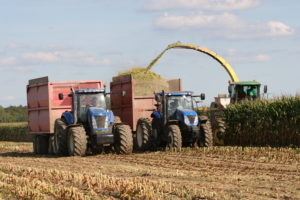
At harvest, good silage management practices include harvesting the crop at the proper moisture and stage of maturity, rapid filling of the storage clamp, adequate packing of the ensiled material, salting the surface of the silage and lastly properly sealing the structure with plastic. Then what happens during the ensuing fermentation will determine the quality and quantity of the forage that is available at feedout.
Phase 1: Phase 1 starts at crop harvest and under ideal conditions of moisture, chop length, and firm (high density) packing lasts only a few hours. This first phase continues until either the oxygen or water-soluble carbohydrate supply has been depleted. The most notable feature of this 1st phase is the increased temperature of the freshly ensiled crop resulting from the ongoing plant respiration of sugars where carbon dioxide, water and heat are produced. In poorly sealed and/or packed silos, the clamp life of the resulting forage can be reduced since the initial growth of aerobic spoilage organisms (yeasts and Bacillus species) occur during this phase. Once feedout occurs (phase 5), yeasts can rapidly increase in numbers causing heating in the feed clamp and lowering feed consumption.
Phase 2: Phase 2 begins when the trapped oxygen supply is depleted and generally lasts no longer than 24 to 96 hours. During this phase, anaerobic (without oxygen) hetero-fermentation occurs. The dominating bacteria during this phase are Enterobacteria (e.g. E. coli). They can tolerate the heat produced during the aerobic phase and are viable in a pH range of 5 to 7 which is found in the fermenting forage at this time. These hetero-fermenters produce both acetic and lactic acid, but tend to be inefficient at producing these acids resulting in nutrient and dry matter losses of the fermenting crop. The final ratios of these acids depend on the crop maturity, moisture, fermentable sugars and bacterial populations. The reason Silo-King® is also formulated with food-grade anti-oxidants and anti-fungals is to shorten Phases 1 and 2, resulting in greater DM and nutrient retention of the harvested crop. When the pH drops below 5, phase 3 of silage fermentation begins.
Phase 3: Phase 3 is a critical phase. During this phase, either the homo-lactic (end product = only lactic acid) or hetero-lactic (end products = lactic, acetic and carbon dioxide) bacteria will dominate. Homo-lactic bacteria are more efficient than the hetero-lactics, and can rapidly drop the pH of the fermenting forage by efficiently producing lactic acid as the only end product. Again, this is why Silo-King® “seeds” the fresh silage with only homo-lactic bacterial strains. In this phase the stabilisation of temperature of the fermented crop occurs, the dominating bacteria convert water-soluble carbohydrates to acid, which reduces the pH and, in turn, preserves the silage. In well-fermented, homo-lactic silages, lactic acid can account for over 70% of the total organic acid content.
The final pH of an ensiled crop depends on the type of forage, fermentable sugars and moisture content of the forage at harvest. Legumes, i.e. lucerne, have less water-soluble carbohydrates, a higher buffering capacity, and generally reach a final pH of approximately 4.5. Maize silage, in contrast to grasses and legumes, has a lower buffering capacity, more water-soluble carbohydrates, and generally reaches a pH ≤ 4.0. When the terminal pH is reached, the forage is “preserved” within the silo. Silage pH does not indicate the rate or quality of the resulting silage. To determine the quality of the silage, a complete analysis is needed where the feed’s nutritive content including rumen digestibility of the forage’s fibre and dry matter is quantified as well as acetic, lactic, etc. are all analyzed.
Phases 2 and 3 are completed within 3 days to 3 weeks from time of harvest. Thus, the general recommendation is to wait at least 3 weeks before feeding newly harvested forages. The length of this fermentation process will vary depending on the crop harvested (related to buffering capacity), moisture, and maturity of the ensiled crop. Properly-applied, a high-quality silage additive, like Silo-King®, will decrease the fermentation time required. Silo-King® treatment of the forage helps to push fermentation completion towards that best-case scenario of 3 days. Typically, the sooner the fermentation reaches completion, then the greater the retention of DM and nutrients.
Phase 4: This phase lasts through the remainder of the storage period. This “stable” phase is where the crop is unchanging as long as oxygen does not penetrate into the silage (e.g. through silo walls, poor quality and /or damaged covers and bale wrap) and the final temperature of well-preserved silage is <25°C (depending on ambient temperatures at harvest and at feedout). During Phase 4, the EU-approved Silo-King® enzymes hydrolyse the forage’s fibres, complex starches, etc. This results in enhanced nutrient digestion in the rumen of the cow. Also, if needed, the enzyme-released sugars from the fibres and starches can be fermented by the Silo-King® homo-lactic bacteria to create lactic acid which efficiently reduces the pH of the silage. Studies show that enzyme-treated starches and the neutral detergent fiber (NDF) become more quickly degraded in the rumen. Furthermore, studies demonstrate that both starch and fibre digestibility increase with ensiling length, plateauing between 3-6 months of storage.
Phase 5: This phase occurs during feed out, is just as important and often neglected part of the fermentation process, and can result in substantial dry matter losses as oxygen is reintroduced into the fermented crop. Proper management of the silage face minimizes dry matter losses and optimizes feed intakes by dairy and beef stock. Silo-King® helps address the issues that can occur in Phase 5, by addressing them all the way back during Phase 1. Controlling yeast and their respiration during Phase 1 it can pay dividends with regard to longer clamp life during feedout (Phase 5).
Silo-King® is formulated with EU-approved silage enzymes and homo-lactic bacteria, anti-oxidants and anti-fungals with the animal’s nutritional efficiency and the environment in mind.