
By Dr. Louisa E. Koch, Ph.D., P.A.S.
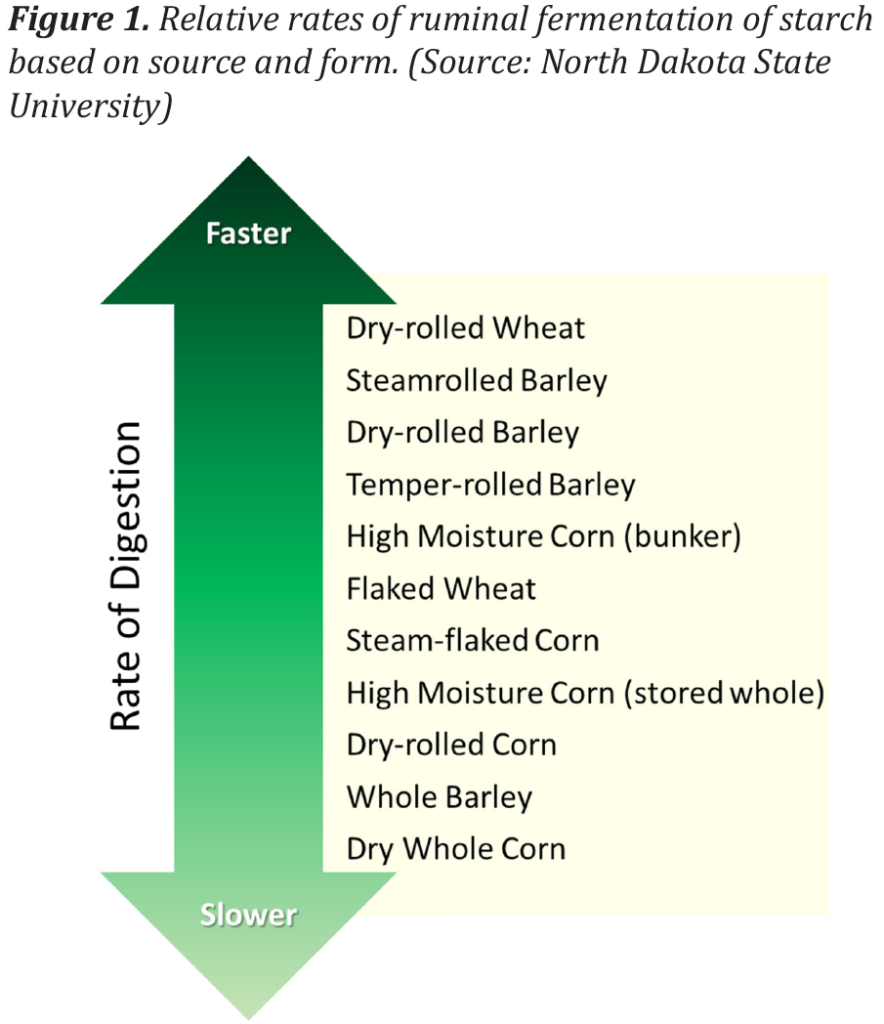
Cereal grains represent a major source of energy for the high-producing dairy cow and can greatly impact feed efficiency. Transforming every pound of nutrients into saleable product is the cornerstone of achieving optimal feed efficiency. In most dairy production systems, corn is the predominant cereal grain. The largest nutrient by weight is thus starch (approximately 70%). How corn is processed can cause a great amount of variation in digestibility and energy availability to the animal (Figure 1). This variation can influence the way it is utilized in a ration and ultimately impacts animal production.
The starch within the corn kernel must be available to be fermented in the rumen and/or digested in the small intestine. There are three primary factors that influence the starch digestibility in feed grains. These are processing (i.e. particle size), harvest/storage (dry vs. HMSC), and endosperm type (prolamin-starch matrix). In corn, proteins called prolamins cross-link with starch. This results in a water-tight matrix that increases the corn vitreousness whilst reducing the ruminal degradability.
A University of Wisconsin study demonstrated that total tract starch digestibility decreased by 0.86% for each percent unit increase in the grain prolamin content. Prolamin proteins are very resistant to digestion. This is why experts recommend grinding corn to an adequate particle size or, in the case of high-moisture corn, ensuring optimal fermentation.
Ensiling and steam flaking can influence starch digestibility by disrupting this prolamin matrix and allowing enzyme access. During the fermentation process, the prolamin proteins degrade into ammonia-nitrogen. Typically, high moisture corn samples with an NH3-N concentration above 5% indicate well fermented corn with improved starch digestibility.
Inadequately processed corn can result in poor or slower digestion and lower feed efficiency. Grinding increases the starch digestibility by increasing the surface area of the grain. This exposes more of the endosperm for microbial attachment and enzyme accessibility. Corn ground to less than 700 microns is considered finely ground. This should be the goal for lactating dairy cows. Not only can finely ground corn produce a milk response advantage compared to feeding cracked corn, but it can change the site of digestion.
Studies show grain particle size of dry ground corn correlates to ruminal and total tract starch digestion in dairy cattle. (Firkins et al., 2001; Ferraretto et al., 2013.) You can improve total tract starch digestibility by over 6% (85.0-91.4%) with finely ground corn versus cracked or rolled. The same is true with high-moisture corn, where total tract starch digestibility improved over 4% when ground instead of rolled. (Firkins et al., 2001.)
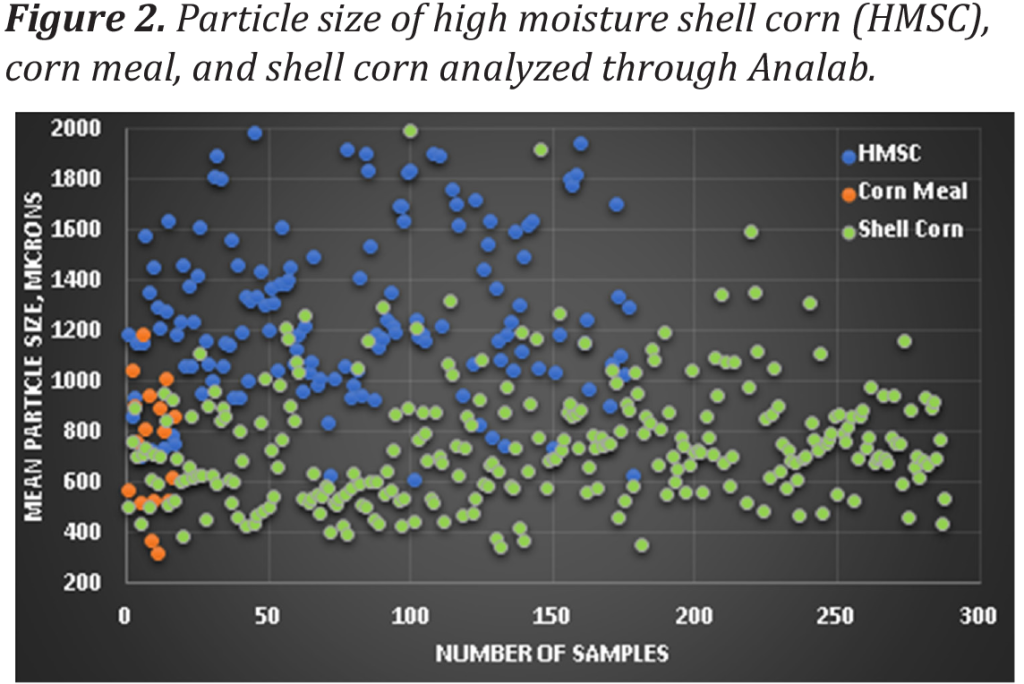
You can do a quick, on-farm particle size evaluation using four sieves and a collection pan (4.75 mm, 2.40 mm, 1.01 mm, and 0.54 mm sieves). However, a reputable laboratory will produce the most repeatable and consistent determination of particle size. Most commercial laboratories offering particle size analysis use a Ro-Tap shaking device. This sorts the grain through several sieves with varying apertures. Figure 2 shows the distribution of high-moisture corn, corn meal, and shell corn samples analyzed for particle size through Analab, Agri-King’s commercial laboratory.
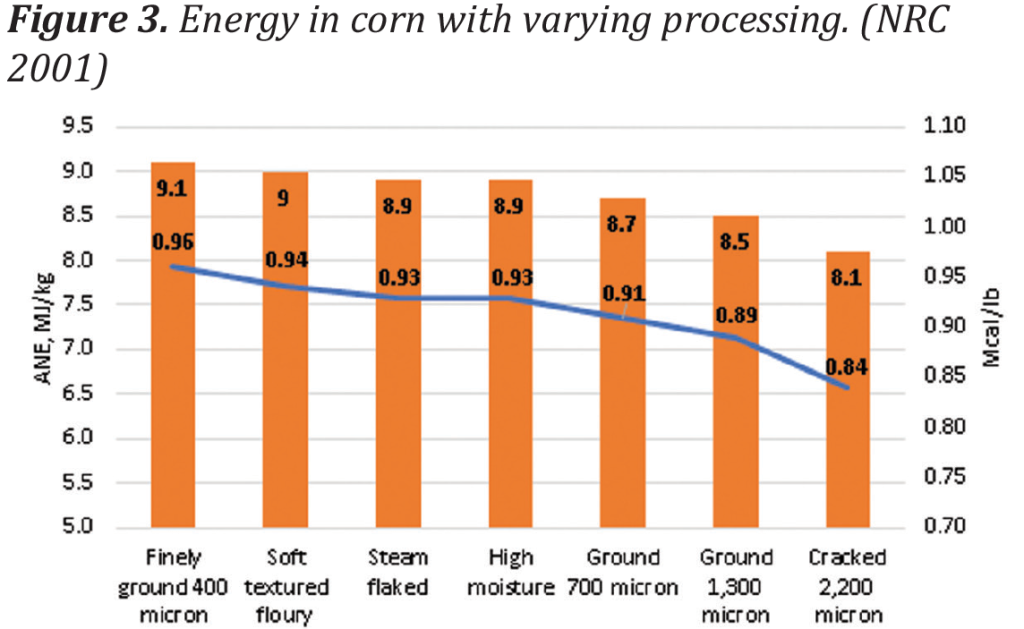
The new Dairy NASEM 2021 defines the nutrient requirements for dairy animals. It does not, however, specify a direct requirement for starch. Previous research indicates starch is necessary for the provision of energy to the rumen microbes and the production of propionate, a precursor for glucose. If ration starch fermentation is optimal, it can produce high levels of volatile fatty acids (VFA). These will in turn provide the necessary substrates for these processes. The animal needs glucose to make milk, fuel the immune system, and ensure normal reproductive performance. This is why it is important to maximize the starch availability within your corn or grain by ensuring particle size is adequate, fermentation is ideal, or the selection of endosperm type is appropriate. Looking at the energy composition of some commonly fed processed corn types, you can see how the energy differs. (see Figure 3.)
If you do not have the ability to modify the grind size of the corn, the addition of enzymes can also help increase the availability of starch so the animal is able to capture as much energy as possible.
One of Agri-King’s enzyme products like Maximizer®, REAP®, Ru-Max®, Ru-Mend®, Zy-Mend®, or Zym-O-Factors® can help maximize your feed efficiency and get the most out of your grain. Evaluation of your diet digestibility and utilization of starch is necessary when considering if the addition of a feed enzyme is appropriate.
A fecal starch analysis and manure screening done by your Agri-King representative can help determine if digestion is ideal or if there are any opportunities for improvement. Please refer to the March 2023 Advantage article for more information on manure evaluation. For any further questions and guidance on this topic, please contact your local Agri-King nutrition consultant. AK
Fire and Ice: Feeding Crops Stressed by Drought and/or Frost